After grasping the basic concepts and key points for selecting a solar simulator, Luminbox from Zichuang Measurement and Control will further explore the problems it encounters in practical applications. This article will focus on the application scenarios of the equipment, elaborate on how to ensure data accuracy for different test objects, and deeply analyze the meaning of the “AAA” performance standard. 同時に, we will answer crucial questions in practical operation such as spectral characteristics (such as ultraviolet content and spectral customization), equipment service life and usage environment requirements, and provide in-depth and practical technical guidelines to help everyone make a more correct selection of solar simulators. What exactly does a “AAA-level” solar simulator refer to? The luminbox international standard IEC 60904-9 and ASTM E927 solar simulator classification standard “AAA grade” is the highest comprehensive evaluation of the performance of solar simulators based on international standards (such as IEC 60904-9). This grading system classifies three core performance parameters, with the highest level being Grade A.

■ Spectral matching degree (Grade A) : It refers to the matching accuracy of the simulator’s output spectrum with the standard solar spectrum (such as AM1.5G) within each wave band. The higher the grade, the better the spectral authenticity.
■ Irradiation spatial uniformity (Grade A) : It refers to the uniformity of irradiance distribution within the effective beam aperture. High-level uniformity is the key to ensuring the consistency of test sample results at different positions.
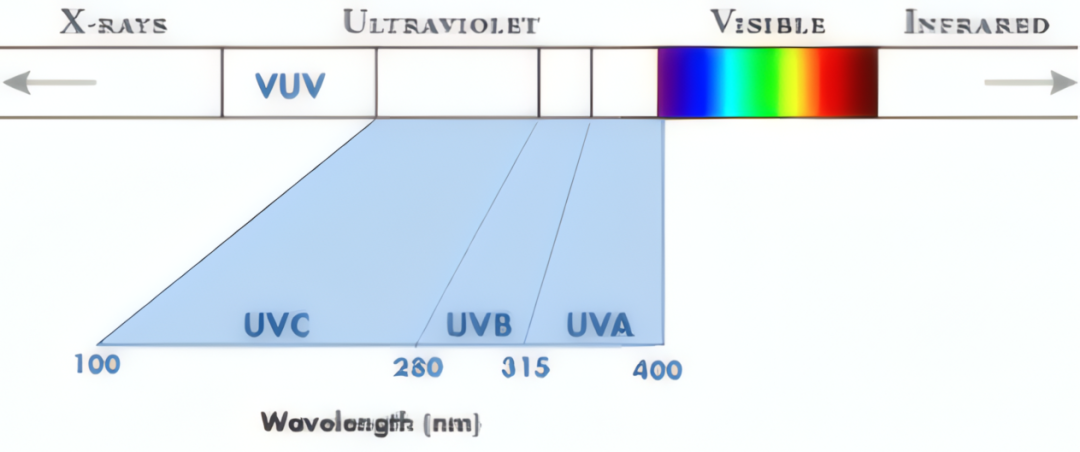
■ Irradiation time instability (Grade A) : Refers to the stability of irradiance output within the set time. High stability is the foundation for obtaining precise and repeatable measurement data. Does the light produced by the AM1.5G solar simulator contain ultraviolet (紫外線) rays? The UV ultraviolet spectral range of luminbox depends on the lighting technology adopted. In the AAA-level standard requirements, there is no clear regulation on ultraviolet rays in the 300nm to 400nm band: xenon lamps will produce a small amount of ultraviolet rays; The LED solar simulator can be completely free of ultraviolet rays. Apart from AM1.5G, can other standard spectra (such as AM0, AM1.5D) be simulated? luminbox can achieve multi-standard spectral simulation through spectral customization: AM0 (space environment, no atmospheric attenuation) : Suitable for spacecraft material testing, but the equipment needs to remove the atmospheric absorption filter; AM1.5D (direct reflection + diffuse reflection, closer to actual outdoor conditions) : Some high-end devices can switch spectral models through software without the need for hardware modifications. What should be noted when testing different types of materials/products? luminbox requires special attention to the spectral matching degree of the solar simulator. When testing amorphous silicon thin-film batteries, it is necessary to note that their spectral response range (such as 400-800 ナノメートル) is different from that of monocrystalline silicon. If a simulator calibrated for monocrystalline silicon is used, the test current of amorphous silicon cells may be depressed due to the excessive intensity of infrared band light, resulting in serious errors. What is the service life of a solar simulator? The luminbox mainly depends on the type of light source:
■ Xenon lamp: The typical lifespan is approximately 1500 時間. When the irradiance drops significantly or the spectrum shifts, replacement is required.
■ LED: Extremely long lifespan, まで 20,000 時間, and with very slow spectral and output attenuation.
■ Halogen lamps: The lifespan is usually between 500 そして 1000 時間, depending on the equipment model, power design and actual usage conditions. Are there any special requirements for the usage environment of a solar simulator? Humidity is a key factor for luminbox. It is best to use a dehumidifier to keep the humidity in the operation room below 50% before turning it on to prevent damage to optical components. 同時に, the equipment will generate heat during operation. Please ensure that the surrounding area is well-ventilated and there are no obstructions blocking the heat dissipation system. In which fields are solar simulators mainly applied? luminbox
The application scope of material chemistry research that requires the application of solar simulators is very wide, mainly including:
■ Photovoltaic field: I-V characteristic testing, efficiency calibration, and aging life research of solar cells.
■ Photocatalytic research: such as hydrogen production through hydrolysis, carbon dioxide reduction, pollutant degradation, 等.
■ Material aging test: Evaluate the durability and stability of plastics, コーティング, textiles, 等. under sunlight exposure.
■ Aerospace: Testing the weather resistance of spacecraft components in the space environment.
渦巻いた1000-1750NM LED