 소용돌이 1000-1750nm LED

새로운 비침습적 광선요법 경로: 비타민 D 및 골다공증 연구를 위한 293nm UVB LED 기술 탐색
메타 제목: 293비타민 D 및 골다공증 연구를 위한 nm UVB LED
메타 설명: 293nm UVB LED 기술이 비타민 D 합성을 어떻게 지원할 수 있는지 살펴보세요., 뼈 건강 연구 및 조절 방법 개발, 비침습적 광선치료 장치.
추천 URL:https://www.yingfengirled.com/
빠른 답변
에이 293nm UVB LED 비타민 D 합성 및 뼈 건강 연구를 위한 제어 가능한 광원으로 연구되고 있는 파장별 자외선 방사체입니다..
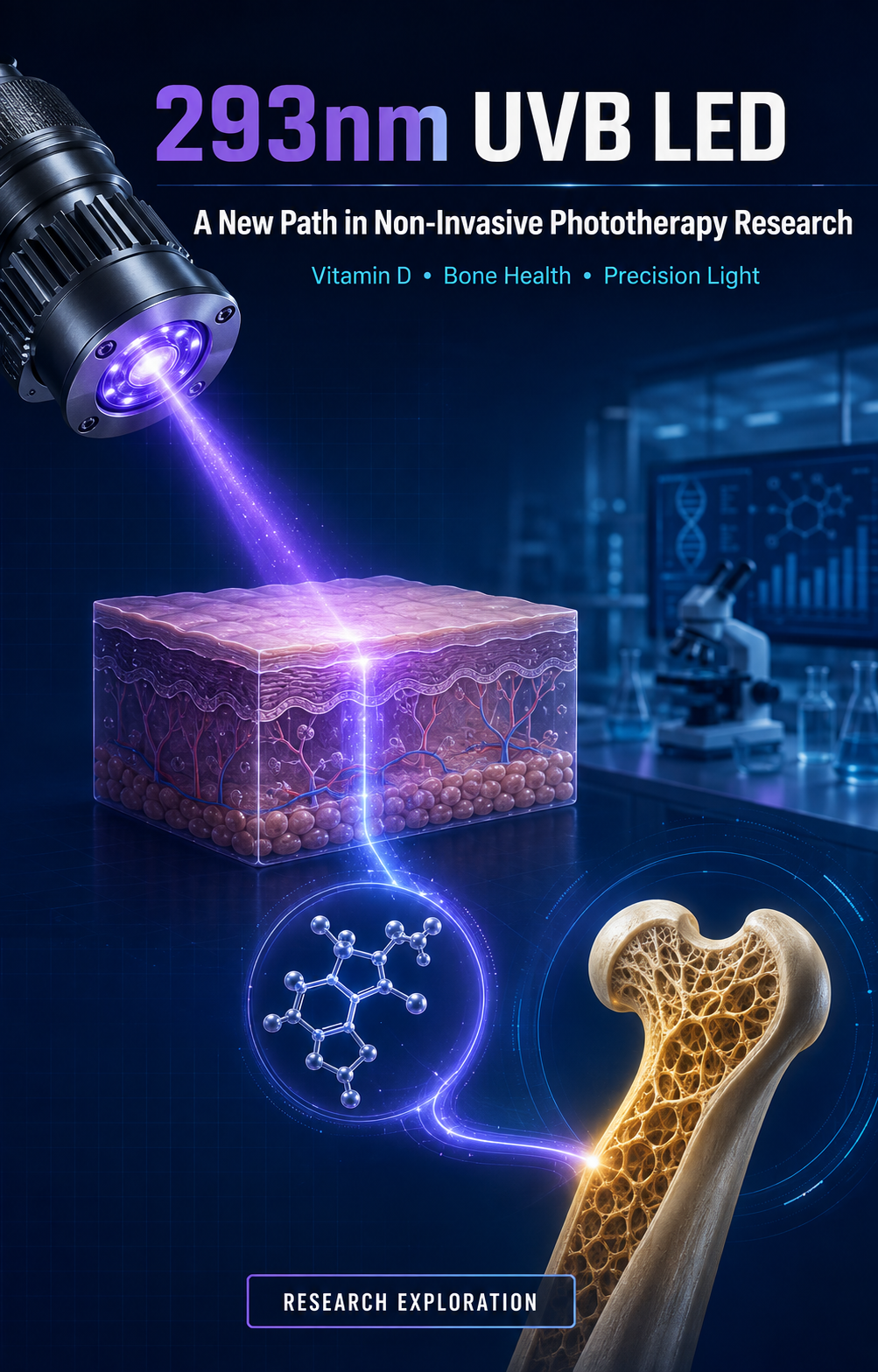
실험실 연구에 따르면 293nm UVB LED 조사가 인간 피부 샘플에서 비타민 D₃ 생성을 자극할 수 있음이 입증되었습니다.. 별도의 동물 연구에서는 골다공증 쥐의 혈청 비타민 D 수치를 높이고 뼈 건강 지표를 개선하기 위해 협대역 UVB LED를 탐색했습니다..
이러한 발견은 햇빛을 통해 충분한 비타민 D를 얻는 데 어려움을 겪는 환자를 위한 잠재적인 비침습적 연구 경로를 제시합니다., 다이어트 또는 경구 보충제. 하지만, 293nm UVB LED 조사는 아직 인간 골다공증에 대한 독립적으로 확립되거나 보편적으로 승인된 치료법이 아닙니다..
해당 기술은 추가 임상 검증을 거쳐야 합니다., 복용량 최적화, 광생물학적 안전성 평가 및 의료기기 규제 검토.
적용 사례 개요
목 설명 기술 협대역 293nm UVB LED 조사 연구 목적 피부 비타민 D 합성의 조절된 자극 잠재적인 적용 비타민 D 결핍과 뼈 건강 연구 대상 장비 휴대용 또는 국소화된 UVB 광선요법 연구 장치 핵심 이점 정확한 파장 및 프로그래밍 가능한 노출 현재 증거 수준 실험실 및 동물 연구 규제현황 골다공증 치료제로 자동 승인되지 않음 엔지니어링 요구 사항 보정된 용량, 균일한 조사 및 안전 관리 비타민 D가 뼈 건강에 중요한 이유?
비타민 D는 칼슘과 인산염 대사를 지원하고 정상적인 뼈 무기질화 유지에 기여합니다.. 비타민 D가 부족하면 칼슘 흡수 장애가 발생할 수 있습니다., 취약한 인구의 뼈 강도 감소 및 골다공증 위험 증가.
신체는 다음을 통해 비타민 D를 얻을 수 있습니다.:
- UVB 방사선에 의해 유발되는 피부 합성
- 비타민D가 함유된 식품
- 경구용 비타민 D 보충제
- 결핍이 진단되면 임상적으로 처방되는 치료
햇빛은 천연 UVB 공급원입니다., 하지만 계절에 따라 효과적인 노출량이 달라집니다., 위도, 하루 중 시간, 의류, 피부 색소침착, 나이와 생활 방식.
이러한 가변성은 연구자들이 비타민 D 생산을 자극하는 보다 재현 가능한 방법으로 파장 제어 UVB LED 시스템을 조사하도록 장려했습니다..
293nm UVB LED가 연구되는 이유?
293nm UVB LED는 햇빛이나 기존 광대역 자외선 램프에 비해 상대적으로 좁은 방출 대역을 생성합니다..
이를 통해 연구자들은 통제할 수 있습니다.:
- 피크 파장
- 방사조도
- 노출 기간
- 조사된 피부 부위
- 광원으로부터의 거리
- 총 자외선량
- 반복 빈도
발표된 연구에서는 293nm UVB LED 노출이 인간 피부 샘플에서 비타민 D₃를 더 효율적으로 생성한다고 보고했습니다., 테스트된 실험실 조건에서, 그 실험에 사용된 햇빛 비교보다. 이는 생체 외 연구였으며 살아있는 환자를 대상으로 한 임상 치료 효능의 직접적인 증거로 해석되어서는 안 됩니다.. 보스턴대학교 의과대학 연구 요약
연구의 중요성은 신중하게 선택된 UVB 파장이 통제되지 않은 넓은 스펙트럼 소스보다 더 짧고 더 통제된 노출을 사용하여 비타민 D 생산을 자극할 수 있음을 입증하는 데 있습니다..
UVB LED와 골다공증에 대한 연구 결과?
에이 2024 동물 연구에서는 비타민 D 조절 및 뼈 건강을 위해 협대역 UVB LED 파장을 평가했습니다.. 연구원들은 이전의 293nm UVB 실험을 참조한 후 장기간 연구에서 선별된 파장 중에서 297nm가 가장 효율적인 파장임을 확인했습니다..
골다공증 쥐에서, 장기간 297nm UVB LED 조사는 비타민 D 수치를 증가시켰으며 측정된 뼈 건강 지표의 개선과 관련이 있었습니다. 공개 동물 연구
이 구별이 중요하다:
- 293nm 증거: 피부 샘플 및 초기 동물 탐사에서 비타민 D₃ 생산
- 297nm 증거: 뼈 건강 결과를 보여주는 장기적인 골다공증 동물 연구
- 인간 골다공증 치료 증거: 확실한 치료 효과를 주장하기에는 아직 불충분합니다.
이용 가능한 연구는 추가 개발 및 조사를 지원합니다.. 293nm LED 부품이 인간의 골다공증을 독립적으로 치료할 수 있다는 사실은 확립되지 않았습니다..
잠재적인 비침습적 광선요법 경로
제안된 경로는 협대역 UVB 방사선에 대한 제어된 피부 노출을 기반으로 합니다..
flowchart TD
    A["293nm UVB LED"] --> B["Controlled skin exposure"]
    B --> C["Cutaneous vitamin D synthesis"]
    C --> D["Serum vitamin D research"]
    D --> E["Calcium and bone-health evaluation"]
비침습적이라는 말은 주사나 수술 없이 빛이 외부로 전달되는 것을 의미합니다.. 노출에 위험이 없다는 의미는 아닙니다..
UVB 방사선은 홍반을 유발할 수 있습니다, 화상, 눈 부상, 복용량이 적절하게 조절되지 않으면 조기 피부 노화 및 누적 광 생물학적 손상.
293nm UVB LED 연구 장치 엔지니어링
의료 또는 연구 장비에는 고출력 UVB LED 이미터보다 훨씬 많은 것이 필요합니다..
완전한 시스템에는 다음이 포함될 수 있습니다.:
- 293nm UVB LED 어레이
- UV 방지 세라믹 패키지
- 금속 코어 또는 세라믹 PCB
- 정전류 드라이버
- 석영 또는 UV 등급 광학 창
- 조도 센서
- 온도 센서
- 노출 타이머
- 피부 거리 제어
- 안전 인터록
- 비상 차단
- 치료기록 보관
- 방열판 및 냉각 시스템
장치는 의도하지 않은 노출을 방지하면서 반복 가능한 광학 선량을 제공해야 합니다..
중요한 광학 매개변수
피크 파장 및 허용 오차
"293nm"라고 표시된 제품은 모든 생산 단위에서 정확히 293nm를 방출하지 않을 수 있습니다.. 의료 및 연구 고객은 보장된 파장 범위 및 생산 빈을 요청해야 합니다..
스펙트럼 대역폭
최대 절반의 전체 폭, 또는 FWHM, 방출 스펙트럼의 폭을 설명합니다.. 원하는 대역 밖의 방사선은 생물학적 반응과 안전성 모두에 영향을 미칠 수 있으므로 전체 스펙트럼 곡선을 검토해야 합니다..
방사조도
방사조도는 정의된 영역에서 수신되는 광전력을 나타내며 일반적으로 mW/cm²로 표시됩니다..
노출량
전달된 UV 선량은 다음과 같이 계산됩니다.:
UV 선량 = 조사량 × 노출 시간
의료 연구 시스템의 경우, 전기 입력 전력은 보정된 방사조도 및 선량 측정을 대체할 수 없습니다..
일률
조명이 고르지 않으면 노출 과다 및 노출 부족 영역이 생길 수 있습니다.. 제조업체는 최소값을 측정해야 합니다., 전체 대상 영역의 최대 및 평균 방사 조도.
온도 안정성
LED 접합 온도가 상승함에 따라, 복사 출력 및 피크 파장은 변경될 수 있습니다.. 따라서 열 성능은 전체 노출 주기 전반에 걸쳐 평가되어야 합니다..
제안된 개발 요구 사항
매개변수 권장 정의 피크 파장 293지정된 공차를 가진 nm 목표 FWHM 보정된 분광복사계를 사용하여 확인됨 방사조도 처리 표면에서 mW/cm²로 정의됨 정량 mJ/cm² 또는 J/cm² 단위로 프로그래밍됨 작동 거리 기계적으로 제어되고 반복 가능 일률 전체 노출 영역에 걸쳐 매핑됨 작동 모드 연속 또는 펄스, 명확하게 식별됨 온도 노출될 때마다 모니터링됨 안전 시간제 노동자, 인터록 및 눈 보호 제어 장치 추적성 LED 및 모듈 생산 로트실적 이러한 값은 전임상 연구를 통해 결정되어야 합니다., 임상 프로토콜 설계 및 위험 평가. 마케팅 주장만으로 선택해서는 안 됩니다..
기존 UV 광원에 비해 잠재적인 이점
293nm UVB LED 시스템은 다음을 제공할 수 있습니다.:
- 정확하게 선택 가능한 파장
- 즉각적인 온/오프 제어
- 프로그래밍 가능한 노출 기간
- 컴팩트한 장치 크기
- 국부적인 조사
- 여러 LED 채널의 독립적인 제어
- 원치 않는 스펙트럼 출력 감소
- 센서 및 소프트웨어와 더욱 쉽게 통합
- 수은 함유 광원 없음
- 휴대용 연구 장치 개발 가능성
기존 UV 램프는 넓은 노출 영역이나 확립된 임상 프로토콜에 여전히 이점을 제공할 수 있습니다.. 선택은 측정된 성능을 기반으로 해야 합니다., 안전, 비용 및 규제 요구 사항.
안전 및 의료기기 규정 준수
UVB 조사는 적절한 선량 조절 및 의학적 평가 없이 소비자 건강 기능으로 취급되어서는 안 됩니다..
완성된 장치에는 다음이 필요할 수 있습니다.:
- 광생물학적 안전성 테스트
- 전기 및 전자기 호환성 테스트
- 소프트웨어 검증
- 사용성 엔지니어링
- 위험 관리
- 환자 접촉 물질의 생체적합성 평가
- 임상적 증거
- 제조 추적성
- 목표 시장의 규제 승인
FDA는 자외선 광선치료 장비를 규제된 의료용 자외선 제품으로 설명합니다.. 투명 광선치료 시스템에는 일반적으로 제어된 출력이 포함됩니다., 처방전 사용 및 환자 안전 기능. FDA 자외선 광선치료 장비
293nm UVB LED 이미터 또는 모듈은 구성 요소입니다.. 완제품을 자동으로 안전하게 만드는 것은 아닙니다., 골다공증 치료에 효과적이거나 승인됨.
293nm UVB LED 개발을 지원하는 방법
의료 연구 및 OEM/ODM 프로젝트용, 전문 UVB LED 제조업체가 지원할 수 있습니다.:
- 맞춤형 293nm 파장 선택
- 좁은 파장 비닝
- 세라믹 SMD 포장
- 하나의- 및 멀티 칩 이미터
- 맞춤형 LED 어레이
- 광학렌즈 선택
- 방사조도 매핑
- PCB 및 열 설계
- 정전류 드라이버 통합
- 다중 파장 UVB 모듈
- 배치 수준 스펙트럼 테스트
- 엔지니어링 변경 알림
고객은 목표 파장을 제공해야 합니다., 방사조도, 노출 영역, 작업 거리, 작동 시간, 프로토타입 개발이 시작되기 전의 균일성 요구 사항 및 냉각 제한 사항.

자주 묻는 질문
293nm UVB LED가 비타민 D를 생산할 수 있습니까??
실험실 연구에 따르면 293nm UVB LED 노출은 인간 피부 샘플에서 비타민 D₃ 생성을 자극할 수 있는 것으로 나타났습니다.. 살아있는 환자의 임상 효과는 복용량에 따라 다릅니다., 피부타입, 노출된 부위, 빈도 및 기타 생물학적 요인.
293nm UVB LED 광선요법으로 골다공증을 치료할 수 있나요??
현재 증거에서는 293nm UVB LED 노출이 인간 골다공증에 대한 입증된 독립형 치료법으로 확립되지 않았습니다.. 기존 연구 결과는 주로 비타민 D 연구와 추가 전임상 또는 임상 조사를 뒷받침합니다..
골다공증 연구에서도 297nm를 언급하는 이유는 무엇입니까??
연구원들은 여러 협대역 UVB 파장을 비교했습니다.. 초기 작업에는 293nm가 포함되었지만, 장기적인 2024 동물 연구에서는 실험 모델에서 가장 효율적인 파장으로 297nm를 선택했습니다..
293nm는 햇빛보다 안전합니다?
협대역 LED는 불필요한 스펙트럼 노출을 줄이고 보다 정확한 선량 제어를 제공할 수 있습니다.. 이것이 본질적으로 안전하지는 않습니다.. 안전은 조사량에 따라 달라집니다, 정량, 노출된 부위, 빈도, 피부 반응 및 장치 보호.
구매자가 293nm UVB LED 제조업체에 무엇을 요청해야 합니까??
구매자는 스펙트럼 곡선을 요청해야 합니다., 피크 파장 허용 오차, FWHM, 복사력, 방사조도, 열 데이터, 평생 테스트, 배치 일관성 및 완벽한 측정 조건.
293nm UVB LED 모듈을 맞춤 설정할 수 있나요??
예. 파장, LED 수량, PCB 치수, 조사 영역, 광학, 운전사, 센서 및 냉각 구조는 자격을 갖춘 연구 및 의료 기기 개발 프로젝트에 맞게 맞춤화될 수 있습니다..
결론
293nm UVB LED는 제어된 비타민 D 합성 및 뼈 건강 연구를 위한 유망 기술을 나타냅니다..
실험실 증거는 비타민 D₃ 생산을 자극하는 능력을 뒷받침합니다., 관련 동물 연구에서는 최적화된 협대역 UVB 노출이 비타민 D 조절 및 뼈 건강 지표에 영향을 미칠 수 있음을 시사합니다..
책임있는 결론은 293nm UVB LED 기술이 이미 골다공증을 치료한다는 것이 아닙니다.. 대신에, 정확한 정보를 제공합니다, 차세대 비타민 D를 위한 프로그래밍 가능하고 잠재적으로 비침습적인 플랫폼, 뼈 건강 및 의료 광선 요법 연구.
맞춤형 293nm UVB LED 솔루션 요청
기술적 평가를 위해, 제공해주세요:
- 목표 피크 파장
- 필요한 파장 허용오차
- 목표 방사조도
- 조사면적
- 작동 거리
- 노출 기간
- 작동 주파수
- 냉각 제한
- 의도된 연구 또는 의료기기 적용
우리 엔지니어링 팀은 LED 패키지를 평가할 수 있습니다., 어레이 구성, 광학, PCB, 애플리케이션 요구 사항에 따른 드라이버 및 열 설계.
의료 면책조항: 이 콘텐츠에서는 새로운 연구 및 엔지니어링 응용 분야에 대해 설명합니다.. 이는 의학적 조언을 구성하지 않으며 293nm UVB LED 노출을 골다공증 또는 비타민 D 결핍에 대한 승인된 치료법으로 확립하지 않습니다..
- 1. 목표 파장 필요 * (원하는 목표 파장 – 다중 선택 가능):
- 311nm 협대역 UVB (건선/백반 광선요법의 경우)
- 305nm – 310nm UVB (비타민 D3 합성을 위해)
- 280nm – 300nm (살균용 & 심층 생체 감지)
- 맞춤형 스펙트럼 (280nm – 325nm 범위)
- 2. 원하는 빔 각도 * (소수출광 각도):
- ( ) 30° (타겟 & 집중 조명)
- ( ) 60° (패치의 중간 확산)
- ( ) 120° (평면유리 / 와이드 균일 조명)
- ( ) 미정 / 엔지니어링 조언이 필요합니다
- 3. 필요한 제품 양식 * (필수 제품 형태):
- ( ) 독립형 SMD LED 다이오드 (3535 / 6565 세라믹 패키지)
- ( ) 통합 UVB LED 모듈 (알루미늄 기판을 사용한 맞춤형 PCBA)
- ( ) 완성된 의료용 광선치료기 (OEM/ODM 협업)
- 파장: 280nm – 325nm (최적화된 305nm/310nm) 그리고 빔 각도: 30° / 60° / 120°
읽어주셔서 감사합니다, 그리고 우리가 어떻게 LED 솔루션 귀하의 프로젝트에 적합할 수 있습니다, 편하게 연락해. 미래의 LED 기술 엄청나게 밝은, 그리고 나는 다음 단계에 참여하고 싶어!
